
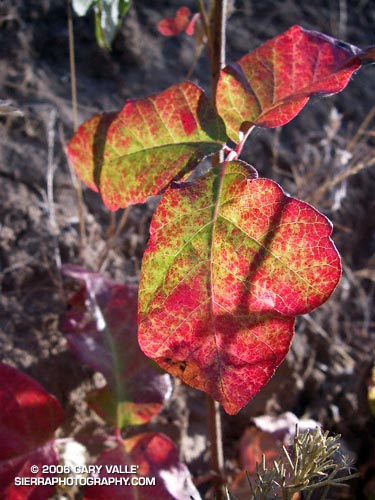
Vibrant green with lustrous leaves in the Spring, Poison Oak (Toxicodendron diversilobum) generally becomes less vivid with age, eventually turning red in the late Summer and Fall. The red color is due to anthocyanin pigments in the plant’s sap that become unmasked as the leaf loses chlorophyll.
Anthocyanin pigments are responsible for the reds and purples in Autumn leaves, and in common fruits and vegetables such as apples, plums, cranberries, grapes, tomatoes and strawberries. Some studies suggest anthocyanin pigments may contribute to the health benefits of these foods.
While the chemistry of Fall colors is fairly well understood, the role the yellow and red pigments play in the physiology of plants is not as clear. In The Warm Hues of Fall Foliage (2002), Geoff Brumfiel summarizes competing theories, ranging from sun and frost protection to acting as a bug repellent — or attractant.
As a starting point for more information regarding poison oak and it’s allergen urushiol, see Poison Oak: More Than Just Scratching The Surface (Wayne’s Word) and Allergies: Poison Plant Allergies: Poison Ivy, Oak, and Sumac (WebMD).
The photograph of poison oak is from a run in Dayton Canyon in the Simi Hills northwest of Los Angeles.
Related post: Poison Oak Along the Garapito Trail